Modern Tropical Digital Papers Patterns: A Practical Guide for Creative Projects
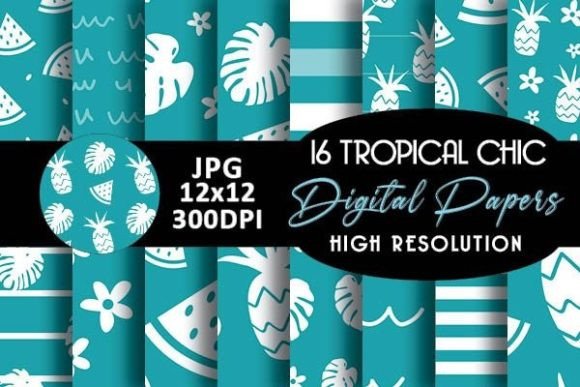
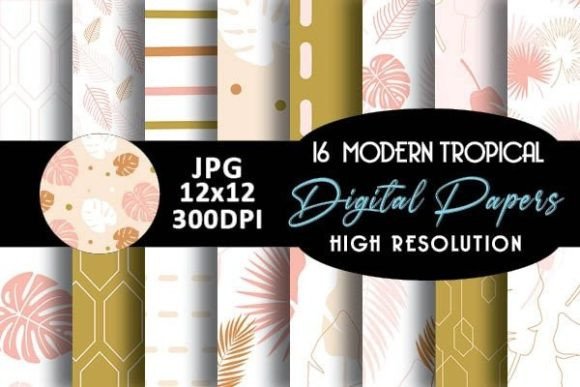
Modern Tropical Digital Papers Patterns refer to a curated collection of high-resolution, digitally designed background papers that reinterpret tropical motifs through a contemporary lens. Unlike traditional tropical graphics—often defined by bold florals, saturated colors, and literal palm fronds—these patterns emphasize clean lines, subtle textures, balanced negative space, and restrained palettes. The result is a set of 16 cohesive digital paper backgrounds that retain the warmth and energy of tropical aesthetics while aligning with current design sensibilities in branding, stationery, and craft applications.
What Sets Modern Tropical Digital Papers Patterns Apart
The distinction lies not just in visual style but in functional intent. These papers are built for versatility: each is delivered as a seamless, tileable 12×12 inch PNG or JPEG at 300 DPI, optimized for both digital use (e.g., Canva templates, Procreate overlays) and physical output (e.g., printed invitations, scrapbook layouts). They avoid overused clichés—no cartoonish flamingos or overly busy tiki borders—but instead feature abstracted monstera silhouettes, geometric leaf arrangements, soft watercolor washes with tropical undertones, and minimalist line-drawn fruit motifs. Texture plays a key role: many include subtle grain, linen overlays, or matte finishes that add tactility without compromising scalability.
This approach supports design integrity across formats. For example, a birthday invitation using one of these papers remains legible when scaled down for email headers or enlarged for wall decor—unlike some vintage-inspired or highly detailed tropical assets that blur or pixelate outside their native resolution.
How They Compare With Other Digital Paper Categories
Digital papers fall into several broad categories: vintage, boho, minimalist, watercolor, geometric, and thematic (e.g., seasonal, holiday, botanical). Modern Tropical Digital Papers Patterns occupy a narrow but increasingly relevant intersection: thematic specificity paired with stylistic restraint. Compared to general “tropical” collections, these 16 papers prioritize cohesion over variety—each shares a unified color family (think warm teals, muted corals, sand-beige neutrals, and charcoal accents), consistent line weight, and similar contrast levels. That makes them especially useful for multi-page projects like wedding suites or themed planners where visual continuity matters.
In contrast, broader botanical or nature-themed papers often lean either hyper-realistic (photographic leaf scans) or ultra-abstract (organic blobs with no clear reference). Modern Tropical Digital Papers Patterns sit comfortably in the middle—recognizably tropical, yet stylized enough to avoid feeling dated or overly literal. They also differ from “resale-friendly” clipart bundles, which tend to prioritize isolated elements over full-background utility. Here, the backgrounds themselves are the primary asset; included clipart elements (e.g., simplified pineapple icons, single-line hibiscus outlines) serve as accents—not standalone graphics.
Strengths for Real-World Use
- Consistency across projects: Because all 16 papers share tonal harmony and scale logic, mixing them within a single layout (e.g., alternating backgrounds in a scrapbook spread or varying invitation layers) feels intentional—not jarring.
- Print-ready reliability: Each file includes embedded CMYK profiles where appropriate and avoids transparency issues that can cause unexpected white gaps in layered PDF exports—a common pain point with free or low-tier digital papers.
- Cross-platform compatibility: Tested across Adobe Suite, Affinity apps, Cricut Design Space, and web-based editors like Canva, these files retain fidelity without requiring manual color correction or resampling.
- Time efficiency: No need to layer textures, adjust hue saturation, or crop repeating patterns—the groundwork is done. Users report cutting background prep time by 40–60% compared to building custom tropical motifs from scratch.
Tradeoffs and Considerations
Like any specialized resource, Modern Tropical Digital Papers Patterns come with inherent boundaries. Their strength in cohesion means less stylistic range than a general “summer” or “vacation” bundle might offer. If you're designing for a client who specifically requested neon-bright, maximalist tiki vibes—or needs photorealistic mango illustrations for food packaging—this set won’t fulfill those needs. Similarly, while the included clipart is well-integrated, it’s not exhaustive: there are no full bouquets, animal motifs beyond subtle silhouettes, or complex layered scenes. That’s by design, not oversight—it reflects a focus on background utility over decorative density.
Another consideration is licensing scope. These papers are intended for both personal and small-business use (e.g., selling handmade greeting cards or digital planners), but they’re not cleared for large-scale commercial reproduction like textile printing or mass-market product packaging without additional permissions. Always verify license terms before scaling usage beyond typical craft or small-run print contexts.
When This Set Fits—and When It Doesn’t
Modern Tropical Digital Papers Patterns are especially well-suited for creators working on tightly scoped, aesthetically unified projects: a boutique bakery launching a “Hawaiian Sunset” cupcake line and needing matching labels, social posts, and menu inserts; a teacher designing a tropical-themed classroom reward system; or a freelance designer crafting a cohesive suite of baby shower invitations, thank-you notes, and digital photo booth overlays.
They’re less ideal for users seeking extreme customization—say, someone who routinely modifies base patterns with clipping masks, gradient overlays, or heavy blending modes. While editable, the files aren’t layered PSDs with individual motif components; they’re flattened, optimized backgrounds. Likewise, educators or nonprofits needing fully accessible contrast ratios (e.g., WCAG AA compliance for text overlays) should test legibility manually—some softer tones may require slight brightness adjustment when pairing with light-colored type.
Practical Alternatives to Consider
If your project demands more flexibility, consider these alternatives—not as replacements, but as complementary options:
- Modular botanical vector packs: Offer infinitely scalable, editable elements (leaves, stems, fruits) for custom pattern building—but require intermediate vector skills and time investment.
- Procreate brush sets with tropical textures: Allow hand-drawn variation and organic feel, but lack the precision and consistency of pre-made papers for batch production.
- Subscription-based design libraries: Provide rotating tropical themes and broader format variety (textures, frames, fonts), but involve recurring costs and potential license fragmentation across vendors.
The choice hinges on your balance of time, technical comfort, output volume, and aesthetic precision. Modern Tropical Digital Papers Patterns excel when you value speed, cohesion, and print fidelity over infinite modularity.
Making an Informed Decision
Evaluating Modern Tropical Digital Papers Patterns isn’t about whether they’re “the best”—it’s about whether they match your current workflow, audience expectations, and creative goals. Ask yourself: Do I need 16 reliable, ready-to-use backgrounds that hold up across digital and physical outputs? Am I prioritizing a refined, contemporary interpretation of tropical over nostalgic or literal versions? Will this set reduce repetition in my design process without sacrificing brand voice?
If yes, the collection delivers measurable efficiency and aesthetic control. If your work leans heavily into illustration, animation, or large-format fabrication—or if your definition of “tropical” includes vibrant chaos rather than calm rhythm—then exploring adjacent resources may better serve your needs. Either way, grounding the decision in actual use cases—not trends or assumptions—leads to more sustainable, satisfying creative outcomes.