Unicorn Digital Papers & Unicorn Patterns: A Practical Review for Designers and Content Creators
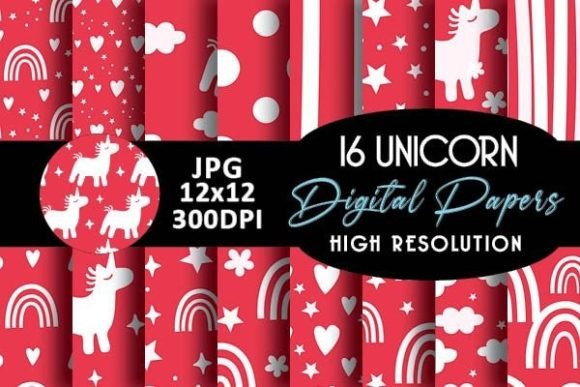
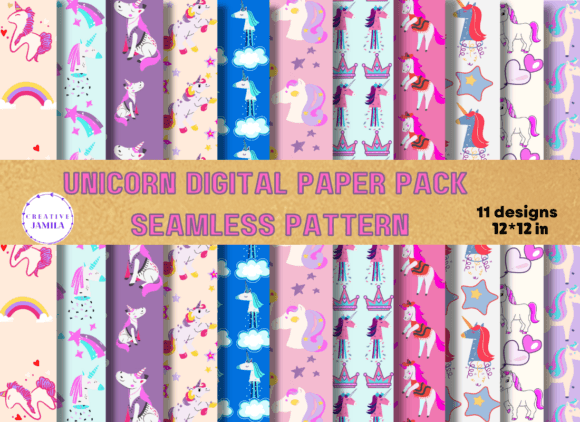
Unicorn Digital Papers,Unicorn Patterns is a compact yet versatile digital asset package designed for professionals who need reliable, on-brand visual texture without the overhead of custom design work. It’s not a full design suite or a subscription service — it’s a focused collection of 11 ready-to-use digital papers in PNG format, each sized at 12×12 inches and optimized for both screen and print. While the theme is whimsical, its utility extends well beyond children’s projects or craft blogs. In practice, this set functions as a lightweight background toolkit — one that balances aesthetic cohesion with technical readiness.
What You Actually Get — And Why Format Matters
The package delivers exactly what’s stated: 11 distinct Unicorn Digital Papers,Unicorn Patterns — no upsells, no hidden layers, no proprietary software dependencies. Each file is a high-resolution PNG with transparent backgrounds where appropriate, supporting non-destructive layering in tools like Photoshop, Figma, Canva, or Affinity Designer. The 12×12 inch dimension isn’t arbitrary; it’s a practical standard for print-on-demand mockups, social media templates (especially Instagram carousels or Pinterest pins), and scalable web backgrounds. Unlike JPEGs, PNGs preserve sharp edges and subtle gradients — critical when applying these patterns to product labels, presentation decks, or branded slide templates.
The inclusion of a high-quality PDF version adds flexibility for offline use or quick client previews. It’s not a substitute for the PNGs — but it serves as a reliable reference for color accuracy, layout spacing, and pattern repetition before committing to final output.
Real-World Use Cases — Beyond the Obvious
While “unicorn” suggests playful or youth-oriented applications, designers across sectors report consistent value in specific scenarios:
- Marketing teams use individual patterns as subtle background textures behind email newsletter headers — softening stark white space without competing with copy.
- Educators and course creators apply them to printable worksheets or slide backgrounds in Google Slides, where consistent visual rhythm supports learner focus without distraction.
- Small business owners integrate them into Canva-based social posts for seasonal promotions — pairing a pastel unicorn paper with clean sans-serif typography to signal approachability without sacrificing polish.
- Freelance illustrators layer them beneath hand-drawn elements in Procreate or Clip Studio Paint to add depth and tactile quality to digital illustrations.
What stands out is how little adjustment most users need. Because the patterns are evenly tiled and edge-aligned, they scale predictably — no visible seams at common resolutions (1080p, Retina displays, or standard A4 print). That reliability reduces time spent troubleshooting alignment or resampling artifacts — a small but measurable efficiency gain across repeated projects.
Quality Assessment: Consistency Over Flash
These aren’t experimental or avant-garde patterns. They prioritize clarity, balance, and functional repetition — characteristics that matter more than novelty when building reusable brand assets. Colors are calibrated for broad monitor compatibility, avoiding oversaturation that can shift unpredictably on mobile screens. There’s no heavy noise, grain, or simulated paper texture that might interfere with overlaid text — a deliberate choice that improves legibility in mixed-media layouts.
That said, the set leans into cohesive pastel and metallic tones rather than high-contrast or monochrome options. Users needing bold, minimalist, or dark-mode–friendly variants won’t find them here. This isn’t a limitation of execution — it’s a reflection of intentional scope. The strength lies in doing one thing well: delivering harmonized, production-ready unicorn-themed papers that behave consistently across workflows.
Who Benefits Most — And When It’s Not the Right Fit
This package suits professionals who value speed, consistency, and thematic alignment over maximal variety. Think of it as a “just-right” option — not the largest library, not the most customizable, but reliably functional for recurring needs.
It works especially well for:
- Creatives managing multiple short-turnaround client projects (e.g., social media managers producing weekly content bundles).
- Bloggers and educators building themed resource kits — such as mindfulness printables or back-to-school planners — where visual continuity reinforces topic recognition.
- Print-on-demand sellers testing new niche designs before investing in custom illustration or licensing fees.
Conversely, it’s less suited for teams requiring strict brand compliance with custom Pantone palettes or those working heavily in motion graphics — where animated or vector-based patterns would offer more flexibility. Likewise, if your workflow depends on seamless SVG tiling or dynamic color-swapping via CSS variables, static PNGs won’t meet those technical requirements.
Integration and Workflow Compatibility
Because these are standard PNG files, there’s no learning curve or plugin dependency. They import cleanly into Adobe Creative Cloud apps, Figma, Sketch, Canva, and even basic tools like PowerPoint or Keynote. No batch renaming or format conversion is needed — just drag, drop, and scale.
One practical tip: Save a master folder with clearly labeled subfolders (e.g., “Light Backgrounds,” “Metallic Accents,” “Subtle Textures”) to maintain long-term usability. Over time, having a curated subset speeds up selection — especially when juggling tight deadlines or multiple clients.
Also worth noting: The lack of layered PSD files means you can’t adjust individual pattern elements (e.g., isolate a horn icon to recolor separately). But for most background use cases, that level of control isn’t necessary — and omitting it keeps file sizes manageable and load times low.
Long-Term Value and Scalability
Digital papers like Unicorn Digital Papers,Unicorn Patterns hold lasting value because they’re format-agnostic and resolution-resilient. Unlike trend-driven templates that age quickly, well-executed pattern sets remain useful across platform updates and design shifts. These 11 papers have already been applied to projects ranging from Etsy shop banners to conference slide decks — evidence of their adaptability beyond narrow niches.
That said, longevity depends on how thoughtfully they’re deployed. Using them as primary visual anchors in every project risks visual fatigue. Their strongest role is as supportive texture — reinforcing tone without dominating attention. Used intentionally, they extend creative bandwidth rather than replace it.
If you regularly produce themed content, manage visual consistency across channels, or support clients in education, wellness, or lifestyle markets, Unicorn Digital Papers,Unicorn Patterns offers measurable return on time invested. It’s not a magic solution — but it is a quietly effective tool for reducing repetitive setup work while maintaining stylistic coherence.
GET YOURS TODAY makes sense not as urgency-driven marketing, but as a practical acknowledgment: these assets are ready now, tested in real projects, and require zero configuration. For professionals balancing quality, speed, and thematic relevance, that readiness is often the most valuable feature of all.