Red Unicorn Digital Paper Patterns: A Practical Guide for Creative Professionals and Hobbyists
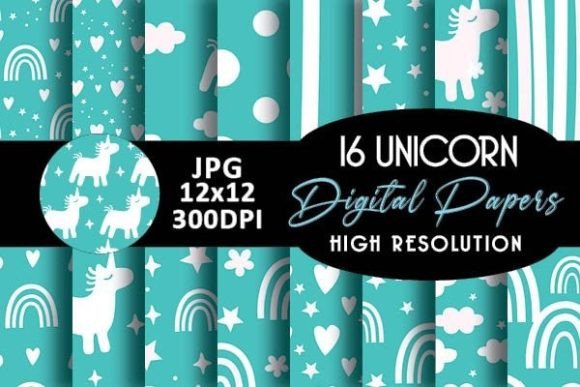
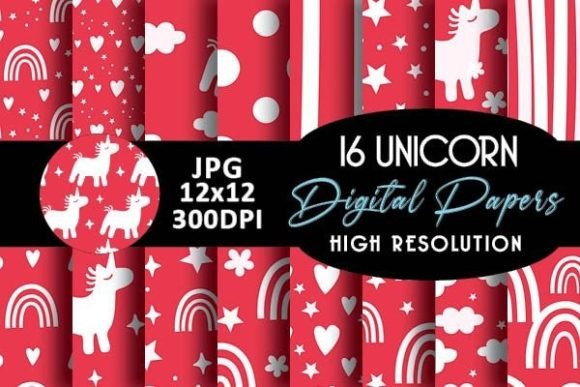
Red Unicorn Digital Paper Patterns is a curated collection of 16 high-resolution digital paper backgrounds, each featuring cohesive, whimsical unicorn-themed designs—including unicorns, rainbows, stars, clouds, pastel florals, and subtle glitter textures. Unlike generic clipart bundles or single-purpose templates, this set delivers versatile, print-ready PNG and JPEG files (typically 12″ × 12″ at 300 DPI) designed specifically for layered creative workflows. What distinguishes Red Unicorn Digital Paper Patterns is its intentional balance: it avoids oversaturation while maintaining strong visual identity—making it suitable for both children’s projects and modern, minimalist adult crafts.
How It Fits Into the Broader Landscape of Digital Design Resources
Digital paper patterns fall into several overlapping categories: scrapbooking kits, commercial-use background libraries, craft template suites, and themed design asset packs. Red Unicorn Digital Paper Patterns sits most naturally within the first two—but with notable nuance. Compared to broad “fantasy” or “kids’ themes” collections that include dozens of unrelated elements (fonts, frames, icons), this set focuses tightly on paper backgrounds only. That means no redundancy, no mismatched color palettes, and no learning curve tied to navigating hundreds of files. It also differs from AI-generated pattern tools, which often produce inconsistent scale, repetition artifacts, or low-resolution outputs unsuitable for physical printing.
For users weighing options, the distinction matters: if your goal is to build a cohesive invitation suite, design a themed planner cover, or create layered scrapbook pages, having 16 harmonized papers—each with consistent lightness, saturation, and motif density—reduces trial-and-error significantly. In contrast, free download sites or bulk marketplace bundles may offer more files but often require extensive curation, color correction, or resizing before use.
Strengths: Where Red Unicorn Digital Paper Patterns Delivers Consistently
- Color harmony and print reliability: All 16 papers share a carefully calibrated pastel-to-vibrant spectrum—soft lavenders, sky blues, buttery yellows, and clean whites—that translates well across inkjet and laser printers. Unlike some digital papers that shift dramatically when printed, these maintain legibility and depth without heavy post-processing.
- Scalable versatility: Each background works equally well at full sheet size (e.g., for greeting cards or wall art) or cropped and tiled (e.g., as subtle web page textures or planner dividers). The absence of central focal points in most designs supports flexible composition.
- Licensing clarity: The set includes standard commercial use rights—meaning you can apply the papers to physical products you sell (e.g., handmade journals, printable party kits, fabric transfers), provided you don’t resell the papers themselves. This is notably more straightforward than subscription-based services where usage terms change quarterly.
- Low technical barrier: No software lock-in. Files open in Photoshop, Affinity Designer, Canva, Silhouette Studio, or even basic editors like Preview or Paint.NET. No plugins, fonts, or proprietary formats are required.
Tradeoffs and Realistic Limitations
Red Unicorn Digital Paper Patterns isn’t designed to replace illustration libraries or vector-based design systems. If you need editable SVG unicorn silhouettes, scalable line art, or customizable typography, this set won’t fulfill those needs—it offers static raster backgrounds only. Similarly, while the rainbow and cloud motifs are present, they’re integrated subtly; users seeking bold, high-contrast graphic statements (e.g., neon gradients or photorealistic unicorns) may find the aesthetic too gentle for certain branding contexts.
Another consideration is format scope. Because it contains only papers—not matching borders, alphas, or coordinating clipart—the user assumes responsibility for layering and balancing additional elements. For example, adding text over a busy rainbow paper requires thoughtful font weight and contrast adjustment. That’s not a flaw, but it does mean Red Unicorn Digital Paper Patterns functions best as a foundational element rather than an all-in-one solution.
Best-Fit Scenarios: When This Set Aligns With Your Goals
Red Unicorn Digital Paper Patterns is especially appropriate when you prioritize consistency, speed, and tactile-friendly output. Consider it if:
- You’re designing a series of birthday invitations for a unicorn-themed party and want 16 distinct yet tonally unified background options—without sourcing from multiple vendors or adjusting hues manually.
- You run a small craft business selling printable planners or sticker sheets and need reliable, licensable backgrounds that hold up under repeated customer downloads and home printing.
- You’re a scrapbooker building multi-page layouts and value papers with varied texture density—some lightly speckled, others softly watercolored—so adjacent pages feel intentional, not repetitive.
- You teach art or design workshops and need accessible, non-intimidating assets for students exploring composition, contrast, and theme development.
In each case, the strength lies in predictability: knowing that Paper #7 and Paper #14 will sit comfortably side-by-side in a PDF portfolio or printed booklet, without clashing or visually exhausting the viewer.
When Another Option May Serve You Better
If your work demands frequent customization—such as changing unicorn colors per client request, animating patterns for digital presentations, or integrating with parametric design tools—then vector-based resources or generative pattern plugins may offer greater flexibility. Likewise, educators building long-term curriculum materials might prefer royalty-free image repositories with broader thematic coverage (e.g., seasonal, cultural, or educational motifs), since Red Unicorn Digital Paper Patterns is intentionally narrow in scope.
Users working exclusively in web-first environments—like social media graphics or email headers—may also find the 12″ × 12″ resolution unnecessarily large, requiring extra downsampling steps. While perfectly usable, lighter-weight alternatives (e.g., optimized SVG patterns or CSS-based gradient generators) could reduce file bloat in those specific cases.
Practical Integration Tips
To maximize utility, consider how Red Unicorn Digital Paper Patterns interacts with common tools and workflows:
- In Canva: Upload all 16 papers to your Brand Kit for one-click access. Use them as page backgrounds, then overlay transparent shapes or text boxes with contrasting fonts for readability.
- In Cricut Design Space: Import as Print Then Cut backgrounds—ideal for custom cardstock cutouts or layered vinyl decals where pattern continuity matters across multiple pieces.
- For print-on-demand: Test one paper across multiple products (e.g., a notebook cover, tote bag, and enamel pin mockup) to assess how the same design reads at different scales and substrates before committing to full production.
- For hybrid analog-digital work: Print select papers on textured cardstock, then hand-letter or stamp over them—leveraging the digital base for consistency while retaining organic variation.
None of these uses require special permissions or complex setup. That simplicity—paired with aesthetic cohesion—is what makes Red Unicorn Digital Paper Patterns a quietly effective resource for practitioners who value time, control, and visual integrity over novelty alone.
Making an Informed Choice
Ultimately, choosing Red Unicorn Digital Paper Patterns comes down to alignment—not just with theme, but with workflow, output requirements, and long-term usability. It excels where repetition, tone, and ease of integration matter more than sheer volume or modularity. It’s not the largest set available, nor the flashiest—but for creators who regularly translate digital ideas into tangible, joyful outcomes, its focused execution often proves more valuable than broader, less considered alternatives.