Patterns Embroidery Geometric Design Set
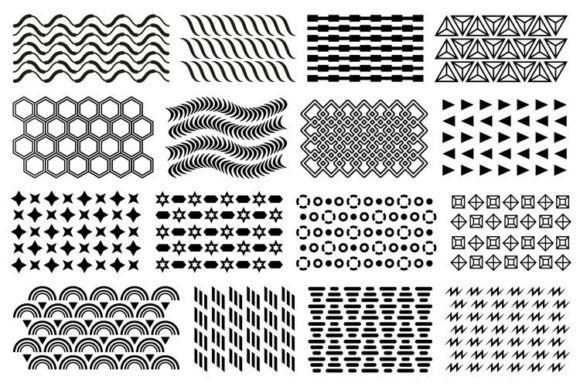
Geometric embroidery patterns bridge tradition and modern design—clean lines, balanced symmetry, and rhythmic repetition that feel both timeless and fresh. The Patterns Embroidery Geometric Design Set delivers exactly that: ten versatile, hand-crafted geometric motifs, thoughtfully digitized and ready for real-world use. Each design balances precision with expressive potential—whether stitched by hand, machine-embroidered, or repurposed digitally across surfaces and scales.
What’s Inside—and Why It Matters
The set includes:
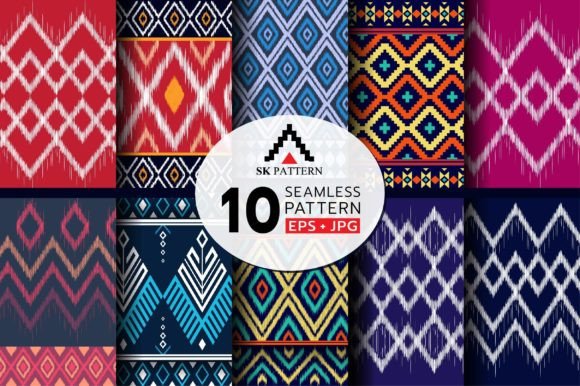
- 10 EPS vector files—scalable without quality loss, ideal for resizing, editing in Illustrator or Affinity Designer, or prepping for print production;
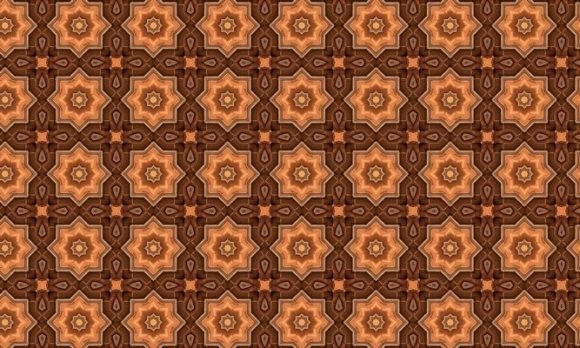
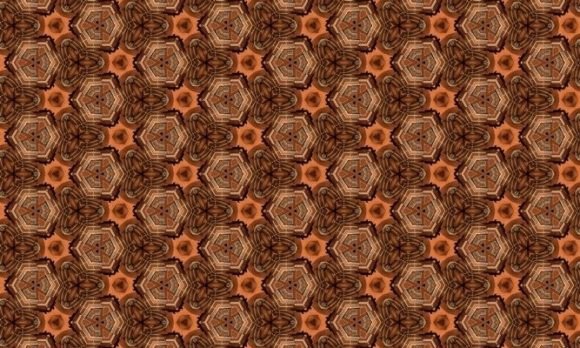
- 10 high-resolution JPG files (5665 × 3500 pixels, 300 DPI)—ready to drop into Canva, Photoshop, or layout software for mockups, presentations, or digital previews.
These aren’t generic clipart shapes. Each pattern was developed with textile logic in mind: repeat-friendly edges, stitch-friendly density, and visual weight that holds up whether printed on silk scarves or woven into throw blankets. The 300 DPI resolution ensures crisp output even on large-format wall art or floor pillows—no pixelation, no guesswork.
For Beginners: Confidence Without Compromise
If you’re just learning embroidery—or exploring surface design for the first time—the Patterns Embroidery Geometric Design Set removes early friction. You don’t need to draft symmetrical repeats from scratch or troubleshoot alignment issues. Instead, you can trace a clean vector outline onto fabric, follow the rhythm of a hexagonal lattice, or adapt a motif to fit a cushion cover using the included JPGs as guides. The predictability of geometry helps build muscle memory: counting stitches, maintaining tension, recognizing how angles translate across curves and corners.
One beginner shared how she used a triangular tessellation file to embroider her first-ever table runner—printing the JPG at 1:1 scale, ironing it onto cotton-linen blend, then stitching over the lines. “It felt like training wheels that actually helped me see progress—not hold me back.”
For Makers & Small Business Owners: Speed Meets Scalability
Running a small textile brand? Launching a capsule collection? Need consistent branding across multiple product categories? This set supports rapid prototyping *and* production-ready output. Because the EPS files are vector-based, you can resize one pattern to fit a 12-inch square coaster or stretch it seamlessly across a 72-inch tapestry—all while keeping sharp edges and uniform line weights. No re-drawing. No interpolation artifacts.
A maker in Portland uses three designs from the set across her Etsy shop: one scaled down for gift wrap paper (printed on kraft stock), another rotated and layered for reversible floor pillows, and a third simplified into a monochrome repeat for organic cotton dresses. She notes, “I spent less than two hours adapting them—and saved weeks of custom illustration fees.”
For Educators & Workshop Leaders: Teaching Through Structure
Geometry is foundational in textile arts—but abstract concepts like tessellation, radial symmetry, or modular repetition land differently when students can touch, trace, and manipulate real examples. The Patterns Embroidery Geometric Design Set serves as both teaching tool and student resource. Instructors download the EPS files, isolate individual units, and project them live during lessons on motif development or repeat construction. Students then experiment—mirroring, rotating, adjusting spacing—before committing to fabric.
One community college professor uses the set in her “Design Thinking for Textiles” course. Her students start by analyzing how each pattern handles edge continuity, then redesign one motif to work in a half-drop repeat. “They’re not just copying—they’re reverse-engineering intention.”
For Digital Creators & Marketers: Flexibility Beyond Fabric
You don’t have to sew to benefit. Graphic designers, bloggers, and content creators regularly license or adapt embroidery-style graphics for social posts, email headers, presentation decks, or branded merch. These files work natively in Adobe Creative Cloud, Figma, and even free tools like Inkscape. The high-res JPGs let you generate realistic mockups fast—drape a pattern over a 3D pillow model, overlay it on a neutral dress photo, or animate a subtle zoom on an Instagram Story.
A lifestyle blogger embedded one of the motifs into her newsletter banner—converted the EPS to SVG, added a soft opacity fade, and linked it to her latest post on mindful making. “It’s subtle, but readers keep commenting on how ‘intentional’ the visuals feel.”
What Priorities Does This Set Support?
Different people weigh features differently—and that’s okay. Here’s how common priorities align:
- Ease of use: No fonts to install, no layers to ungroup—just open and apply. Ideal if you’re juggling multiple projects or working across devices.
- Quality: Vector + high-res raster means fidelity at any stage—from concept sketch to finished product.
- Flexibility: Works equally well for hand-stitching, DTG printing, sublimation, screen printing, or digital collage.
- Commercial value: Fully licensed for personal *and* commercial use—including resale on physical goods (no attribution required).
- Long-term usefulness: Geometric foundations rarely go out of style. These motifs adapt to seasonal palettes, new materials, and evolving trends without needing replacement.
When This Set Fits—And When It Might Not
This set shines if you value clarity, structure, and cross-medium adaptability. It’s especially helpful if your projects involve repetition, scaling, or translation between digital and physical formats.
It may not be the best fit if you primarily seek highly illustrative, organic, or narrative-driven embroidery (e.g., botanical scenes or portrait work). Nor is it intended for users who need built-in color palettes, animated versions, or multi-layered PSD files with blending modes.
Ask yourself:
- Do I often reuse or reconfigure the same core motif across products?
- Do I spend time manually resizing or redrawing patterns to fit different dimensions?
- Would having both vector and high-res raster versions simplify my workflow—not just today, but six months from now?
If yes to two or more, the Patterns Embroidery Geometric Design Set likely matches your rhythm—not as a shortcut, but as thoughtful infrastructure.
Real Projects, Real Scale
From a single scarf hemmed by hand in Brooklyn to a limited-run blanket collection produced in Portugal, these patterns hold space for both intimacy and impact. A textile artist in Lisbon wove one motif into a jacquard throw using the EPS as a loom draft guide. A teacher in Minnesota printed another onto vinyl and cut stencils for her middle school art class. A gift shop owner in Asheville used three designs to create seasonal wrapping paper bundles—each sold out within 48 hours.
None of those uses required special permissions, extra software, or technical expertise beyond what they already had. Just clarity, consistency, and room to make it their own.