Patterns Design Unique: Wild Flower Repeat Patterns
Imagine launching a new line of botanical phone cases—and having your design live up to the freshness, detail, and versatility of real wildflowers. That’s what Patterns Design Unique delivers: a thoughtfully crafted, seamless floral pattern outline rooted in natural form but engineered for real-world use. It’s not just another floral motif—it’s a scalable, editable, multi-format repeat pattern built from the ground up for creators who need reliability without compromise.
Why Seamless Wild Flower Patterns Matter More Than You Think
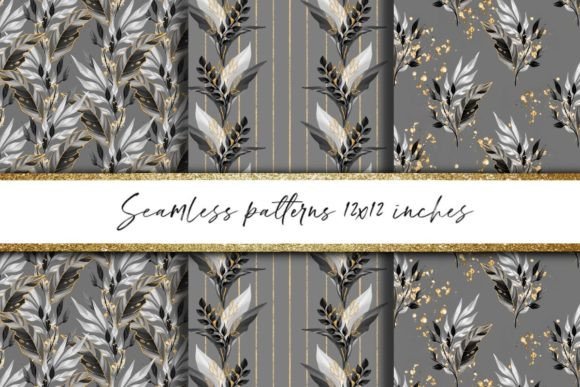
A seamless repeat isn’t just about visual continuity—it’s about functional flexibility. With Patterns Design Unique, the wild flower arrangement flows edge-to-edge with zero visible seams or misaligned stems. That means when you tile it across a 60-inch fabric bolt, stretch it over a wallpaper mural, or scale it down for a greeting card border, the rhythm stays intact. No awkward gaps. No manual patching. No guesswork.
This matters especially for print-on-demand (POD) workflows. Platforms like Printful, Redbubble, or Gelato require predictable tiling behavior—especially at high resolutions and varied aspect ratios. A poorly constructed repeat introduces distortion, cropping errors, or inconsistent density. Patterns Design Unique avoids those pitfalls by using precise vector-based alignment and balanced negative space, so every petal, leaf, and stem lands where it should—every time.
Designed for Real Editing—Not Just Display
“Easy to edit” isn’t marketing speak here—it’s baked into the file structure. The included AI, EPS, and SVG files retain full layer integrity: individual flowers are grouped but unlinked, outlines remain editable paths, and color swatches are named and organized. Want to swap cerulean for sage green across all blossoms? One global recolor command does it. Need to isolate a single bloom for a monogram or logo mark? It’s already on its own layer.
Even the raster formats serve a purpose: the high-res JPG and transparent-background PNG are pre-optimized for mockup integration—no extra resizing or background removal needed. And because the DXF version preserves clean vector outlines, crafters using Cricut or Silhouette machines can cut stencils or vinyl decals directly from the pattern without redrawing.
Where This Pattern Fits—And Where It Doesn’t
Patterns Design Unique shines brightest when authenticity meets adaptability. It works exceptionally well for:
- Fabric designers developing small-batch scarves or quilting cotton—its moderate scale (approx. 4–6" repeat) balances detail with wearability;
- Stationery creators building cohesive wedding suites, where the same pattern can anchor an invitation, wrap a favor box, and texture a thank-you note;
- Apparel entrepreneurs launching limited-run dresses or lounge sets—the organic flow flatters curved seams and drapes naturally across bias cuts;
- Interior designers prototyping custom wallpaper or upholstery for boutique spaces, where subtle variation (achieved via color swaps or opacity shifts) adds depth without visual fatigue.
That said, it’s not ideal for ultra-minimalist branding systems that rely on rigid geometry or strict monochrome palettes. Its strength lies in expressive color and botanical nuance—not stark reduction. If your project demands strict symmetry or industrial precision (e.g., technical textiles or architectural renderings), a geometric or algorithmic pattern may align better.
Practical File Use Across Your Workflow
The ZIP bundle isn’t just comprehensive—it’s curated for intentionality. Here’s how each format supports a different stage:
- AI/EPS: Your primary editing hub—adjust spacing, rotate clusters, or reposition focal blooms before final export;
- PDF: Share proofs with clients or printers; retains vector fidelity while being universally viewable;
- JPG/PNG: Drop straight into Canva, Shopify product mockups, or social media banners—no conversion lag;
- SVG: Embed natively in web projects or animate individual elements (e.g., gentle sway on a landing page hero);
- DXF: Bridge digital design and physical making—ideal for laser-cut packaging inserts or embroidery digitizing prep.
Because all files share the same underlying composition, changes made in one environment carry over cleanly—no version drift, no mismatched scales.
Color, Clarity, and Creative Control
The illustration uses a vibrant yet harmonious palette—think buttercup yellow, dusty rose, and muted sage—balanced with soft charcoal outlines. These aren’t arbitrary choices. The outlines ensure legibility at small sizes (critical for textile weaves or phone case details), while the saturation levels are calibrated to reproduce faithfully across CMYK (fabric printing) and RGB (digital screens). No unexpected dulling or bleeding.
You’re not locked in, though. The layered structure lets you mute background tones, boost contrast for apparel prints, or convert the entire set to duotone for a retro postcard look—all without degrading quality. That kind of control saves hours compared to starting from scratch or wrestling with flattened assets.
Who Benefits Most—and Why Timing Matters
Freelance surface pattern designers use Patterns Design Unique as a reliable foundation when client deadlines tighten—reducing initial sketch-to-final-export time by up to 40%. Small business owners launching seasonal collections appreciate how one pattern adapts across six SKUs (e.g., tote, notebook, mug, scarf, sticker sheet, and email header) without licensing friction or style inconsistency.
Educators teaching digital illustration or POD entrepreneurship use it as a teaching artifact—demonstrating seam construction, color theory in practice, and cross-platform file management. Even hobbyists experimenting with sublimation printing find value: the clean vectors eliminate pixelation on ceramic mugs, and the balanced density prevents ink bleed on polyester blends.
Importantly, this isn’t about replacing originality—it’s about removing friction so your unique voice comes through more clearly. When technical execution stops competing for attention, your storytelling, brand tone, and audience connection take center stage.
A Thoughtful Starting Point—Not a Final Answer
No pattern solves every problem—and Patterns Design Unique doesn’t claim to. It’s most valuable when paired with your judgment: Does this scale suit your target product? Does the color energy match your audience’s expectations? Is the level of botanical realism aligned with your brand’s voice?
Use it as a springboard—not a shortcut. Tweak a stem’s curve. Introduce a contrasting foliage element. Layer it subtly beneath typography. Let it inform your next original motif. That’s where its real longevity lies: not as a static asset, but as a responsive, respectful collaborator in your creative process.