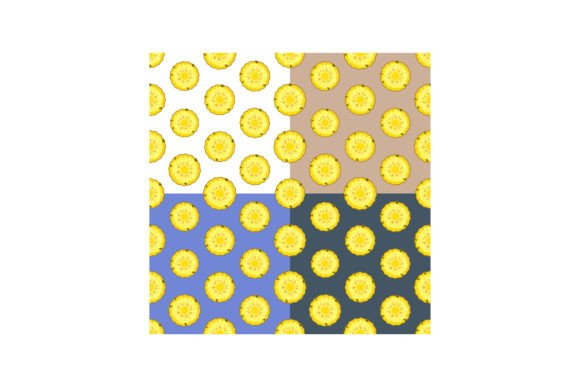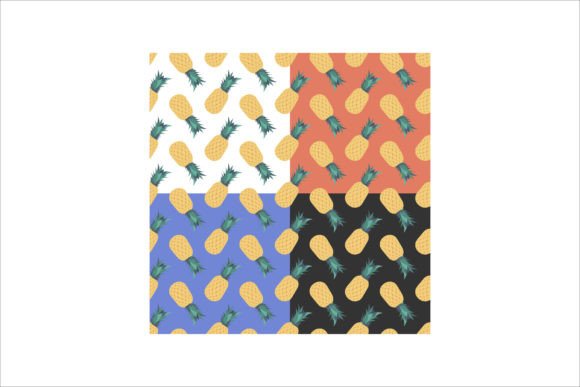
Set of Seamless Patterns with Juicy Ripe
Imagine opening a design resource and finding not just one motif—but a thoughtfully curated set of seamless patterns with juicy ripe pineapple, rendered in crisp vector format, ready to scale from business card to billboard without losing a drop of vibrancy. This isn’t just tropical decoration; it’s a functional design asset built for today’s fast-moving creative workflows. Whether you’re printing on organic cotton tote bags, designing limited-edition stationery for a wellness brand, or building a cohesive visual identity for a Caribbean-inspired café, these patterns offer immediate versatility grounded in real-world usability.
Why Seamless Tropical Patterns Are Gaining Real Traction
Seamless pattern design has quietly evolved from a niche printmaking technique into a strategic visual tool—especially as digital-first brands prioritize consistency across physical and digital touchpoints. Unlike static illustrations or isolated icons, a well-crafted seamless pattern behaves like a living layer: it repeats invisibly, adapts to any surface dimension, and carries mood, rhythm, and meaning through repetition alone. The rise of direct-to-garment (DTG) printing, small-batch fabric suppliers, and POD (print-on-demand) platforms means creators no longer need minimum order quantities to test bold aesthetics. A set of seamless patterns with juicy ripe pineapple, for example, meets that demand precisely—it delivers instant texture, warmth, and authenticity without requiring custom illustration time.
This shift aligns with broader behavior changes: consumers increasingly associate tactile, nature-rooted visuals with values like sustainability, craft, and mindful consumption. Pineapple motifs—particularly those emphasizing ripeness, juiciness, and botanical accuracy—signal abundance, freshness, and care. They avoid cliché by leaning into realism rather than cartoonish tropes. That nuance matters: modern audiences respond to ornamentation that feels intentional, not decorative filler. When used as a design element in packaging, web backgrounds, or social media templates, these patterns reinforce brand voice before a single word is read.
From Harvest Imagery to Vector Precision
The phrase “harvesting tropical fruits” evokes more than agriculture—it suggests timing, care, and sensory richness. In pattern design, that translates to deliberate choices: how light catches the waxy sheen of a pineapple leaf, how shadows fall across segmented skin, how juice might glisten along a freshly cut edge. Today’s best vector-based seamless patterns don’t just depict fruit—they encode those observations into scalable geometry. Each curve, gradient, and negative space is optimized for both visual fidelity and technical performance: clean anchor points, minimal anchor count, and CMYK- or Pantone-ready color builds for professional printing.
This level of refinement reflects how design tools and expectations have matured. Ten years ago, many “tropical” patterns relied on raster textures or low-res scans—fine for web use but problematic for fabric dyeing or large-format signage. Now, designers routinely expect vector files that open in Illustrator, embed cleanly in Figma, and export reliably to embroidery software or textile mills. A set of seamless patterns with juicy ripe pineapple built this way bridges disciplines: it serves the fashion designer sourcing deadstock fabric, the educator creating classroom posters about food systems, and the marketer launching a summer campaign—all from the same source file.
Practical Uses Across Real Workflows
- Fabric & Apparel: Print directly onto linen napkins, swimwear textiles, or cotton poplin for boutique clothing lines. Because the pattern is truly seamless and vector-based, it scales flawlessly—even across irregular garment pieces like bias-cut skirts or curved pillow covers.
- Branding & Packaging: Use as a subtle background layer behind product photography or as a foil-stamped accent on kraft paper boxes. The ripe pineapple motif adds warmth without overwhelming minimalist layouts—a balanced alternative to overused palm fronds or generic citrus.
- Digital Interfaces: Apply as a lightweight SVG background in dashboards or email headers. Unlike heavy JPEGs, vector patterns load instantly and adapt responsively—no pixelation on retina displays or mobile screens.
- Educational & Editorial Design: Illustrate concepts like seasonality, agricultural cycles, or biodiversity in reports or infographics. The harvesting context grounds abstract topics in tangible, relatable imagery.
How Designers Are Integrating These Patterns Thoughtfully
Leading creatives aren’t just dropping tropical patterns into projects—they’re layering them with intention. One interior stylist recently used a pineapple-based seamless pattern as a half-tone overlay on matte ceramic tiles, then paired it with raw wood shelving and terracotta planters. The result felt cohesive, not thematic. Similarly, a sustainable skincare brand applied the same pattern at 8% opacity beneath product names on recyclable labels—adding texture without compromising legibility or eco-credentials.
That restraint reflects a broader trend: ornament is returning, but only when it serves function or feeling—not just filling space. A set of seamless patterns with juicy ripe pineapple works because it’s rooted in observation (the taut skin, the fibrous crown, the golden hue of peak ripeness), not abstraction. It invites reinterpretation: invert the colors for a night-market poster, isolate a single segment as a watermark, or animate subtle movement across a website hero section. Its strength lies in flexibility—not fixity.
What to Look For (and Avoid)
Not all “tropical” pattern sets deliver equal value. Before licensing or downloading, check for:
- True seamlessness: Zoom in at 400%—edges should align perfectly without visible jumps or misaligned gradients.
- Vector integrity: Open the file in Illustrator—if paths are rasterized or embedded as images, scalability and editing will be limited.
- Contextual color palettes: Look for versions in muted earth tones, high-contrast monochrome, and accessible contrast ratios—not just saturated “summer” schemes.
- Licensing clarity: Ensure commercial use covers your needs—especially if applying to physical products for resale or client work.
Avoid sets that rely solely on clipart-style outlines or generic stock tropes. What makes the juicy ripe distinction meaningful is specificity: the slight translucency where light passes through flesh, the subtle variation in scale between mature and developing fruit, the inclusion of leaves with realistic veining—not just silhouette.
Looking Ahead: Ornament With Purpose
As AI-generated assets flood marketplaces, hand-crafted, observation-driven pattern design is gaining renewed respect—not as nostalgia, but as differentiation. A set of seamless patterns with juicy ripe pineapple represents something harder to automate: deep attention to material reality, cultural resonance, and functional adaptability. It doesn’t shout “tropical”—it invites pause, recognition, and quiet appreciation.
For freelancers juggling five clients, this kind of asset saves hours. For educators, it turns a lesson on harvest cycles into something visually anchored and memorable. For small businesses, it offers premium aesthetic credibility without custom illustration budgets. And for anyone choosing what surrounds them daily—on clothing, walls, or screens—it’s a reminder that good ornament isn’t excess. It’s emphasis made visible.
Ultimately, these patterns succeed because they meet people where they are: seeking beauty that’s useful, inspiration that’s grounded, and design that moves easily between screen, stitch, and shelf—without losing its juice.