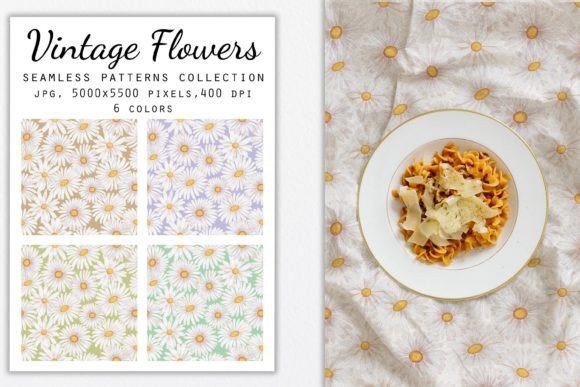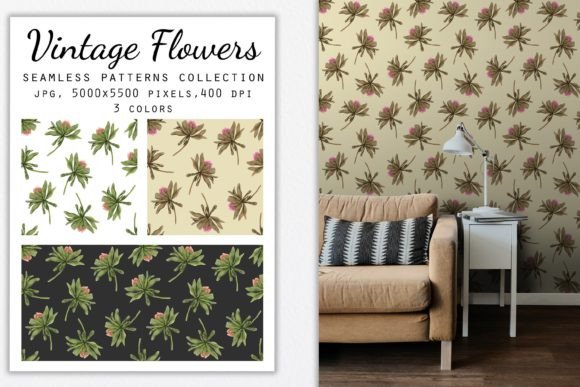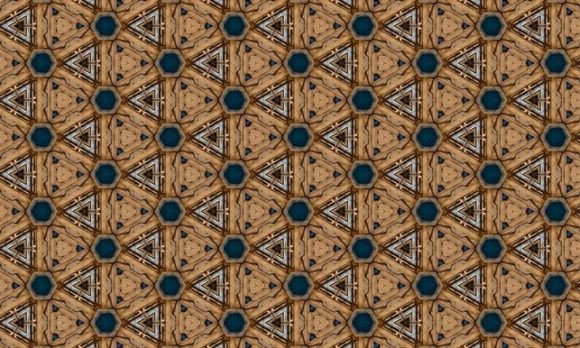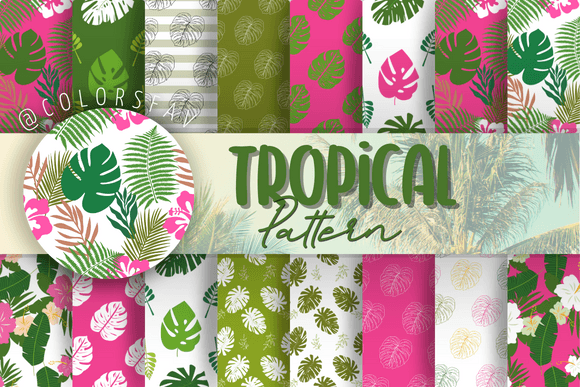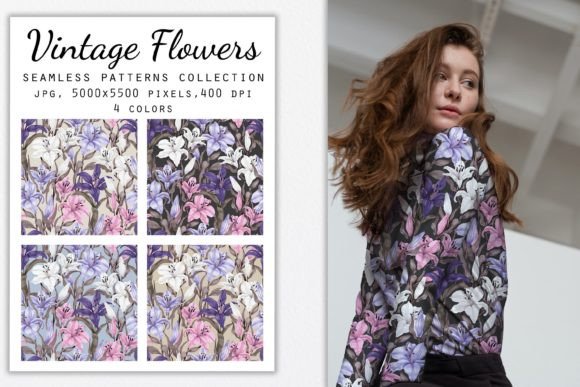
Lily Flowers Seamless Patterns Set
Imagine opening a digital design toolkit and finding four effortlessly elegant, watercolor-style lily flower patterns—each one ready to drop into your next project without a single seam, pixel, or color mismatch. That’s the quiet power of the Lily Flowers Seamless Patterns Set: not just decoration, but a versatile, production-ready resource built for real work.
What You’re Actually Getting—No Guesswork
This isn’t a vague collection of “pretty flowers.” It’s a tightly curated set of four distinct, large-scale lily flower patterns—each designed with intention and precision. Every pattern is delivered as a high-resolution JPG file: 5000 × 5000 pixels, RGB color mode, and printed-ready 400 dpi resolution. That means you can scale confidently—from social media banners to wall murals—without blurring, banding, or quality loss.
The watercolor aesthetic isn’t just stylistic—it’s functional. Soft edges, subtle granulation, and gentle pigment bleed give these patterns organic warmth and depth. Combined with a cohesive pastel palette (think muted rose, dusty sage, sky blue, and ivory), they strike a rare balance: refined enough for luxury branding, approachable enough for classroom handouts or handmade packaging.
Why Seamless Really Matters—Beyond the Buzzword
A seamless pattern repeats infinitely without visible breaks or alignment artifacts. That sounds technical—but in practice, it saves hours. No more manually tiling, adjusting offsets, or patching gaps in Photoshop. Whether you’re wrapping a product box in Illustrator, building a Shopify background in Figma, or designing a Canva newsletter template, these patterns tile cleanly across any surface size—no post-processing required.
And because each design is large (5000 px), you retain crisp detail even when zoomed or cropped. Try scaling a 1000 px pattern up to fill a 4K monitor background—you’ll see thinning, interpolation, or softening. With this set, that problem vanishes. Designers who’ve used it report faster mockup turnaround, fewer client revision rounds on texture placement, and consistent output across print and screen.
Where These Patterns Earn Their Keep
Professionals don’t buy patterns—they solve problems. Here’s where the Lily Flowers Seamless Patterns Set delivers tangible value:
- Branding & Packaging: A boutique skincare line used one of the patterns as a foil-stamped liner inside gift boxes—soft enough to feel luxurious, distinctive enough to reinforce brand identity without overpowering product photography.
- Digital Content Creation: Educators embedded the patterns as subtle slide backgrounds in Google Slides decks for parent workshops—adding visual calm without distracting from key points or triggering accessibility concerns (the contrast meets WCAG AA guidelines at typical viewing sizes).
- Print-on-Demand & Merch: A freelance illustrator layered one pattern beneath hand-lettered quotes on greeting cards—then reused the same file for fabric swatches, enamel pin backing sheets, and sticker sheets. Consistency across SKUs reduced asset management overhead by ~30%.
- Web & UI Design: A wellness blog used a desaturated version as a low-opacity overlay behind hero text—creating depth while maintaining readability. The watercolor texture added warmth missing from flat-color gradients.
Practical Tips Before You Start Designing
These patterns shine brightest when treated as foundational elements—not afterthoughts. Here’s what seasoned users recommend:
- Test early in context: Drop a pattern into your actual layout (not just a blank canvas) at final size. Watercolor textures behave differently over photos vs. solid colors—preview how light interacts with your content hierarchy.
- Respect the palette—but adapt wisely: The pastel base is intentional, but you can adjust saturation or brightness non-destructively in most editors. Avoid heavy hue shifts; they disrupt the watercolor harmony. Instead, try layering with a neutral tint or using blending modes like Multiply or Overlay for subtlety.
- Watch your DPI workflow: At 400 dpi, these files are optimized for print-first use. For web-only projects, resample down to 72–150 dpi *after* final sizing to reduce load time—don’t serve full-res JPGs to browsers unnecessarily.
- Check licensing scope: This set permits commercial use—including client work, merchandise, and digital templates—as long as you’re not reselling the patterns themselves as standalone assets. Always verify terms if distributing via marketplaces like Creative Market or Etsy.
Not Just for “Floral Lovers”—A Strategic Texture Choice
Lilies carry quiet symbolism—purity, renewal, grace—but this set avoids cliché. There’s no heavy botanical realism or stiff symmetry. Instead, each pattern balances negative space with expressive blooms, letting typography or imagery breathe. That makes them unusually flexible: a tech startup used one as a subdued background for an investor pitch deck; a yoga studio applied another to downloadable meditation guides—both achieved sophistication without floral overload.
What sets this apart from generic “vintage” or “watercolor” bundles is restraint. Four patterns means curation—not clutter. You won’t waste time sifting through 20 near-identical variants. Each has a clear role: one with bold, centered blooms for statement surfaces; one with scattered, airy stems for delicate layering; one with tighter repeat rhythm for textile-like consistency; and one with softer pigment diffusion for ambient texture.
Final Thought: Tools Should Disappear
The best creative resources don’t draw attention to themselves. They recede just enough to let your message, product, or idea take center stage—while quietly elevating everything around it. The Lily Flowers Seamless Patterns Set does exactly that: no learning curve, no compatibility headaches, no compromises on fidelity or tone. It’s the kind of asset you download once, use across half a dozen projects, and forget you paid for—because its value becomes invisible in how smoothly your work comes together.
If you’ve ever spent 45 minutes trying to fake a seamless watercolor repeat—or hesitated to use floral motifs for fear of looking dated or overly sweet—this set redefines what’s possible with simplicity, craft, and thoughtful execution.