Flower Patterns, Watercolor Patterns
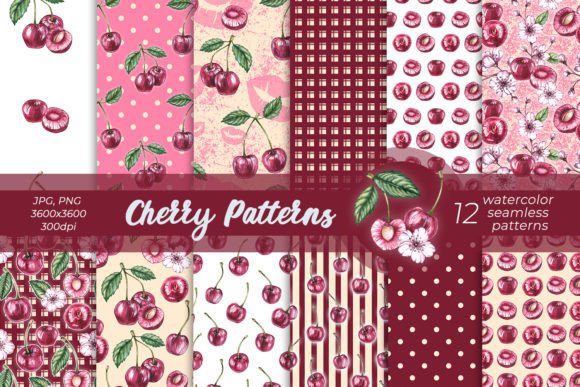
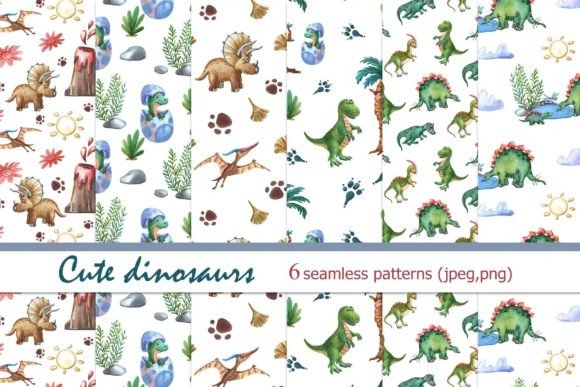
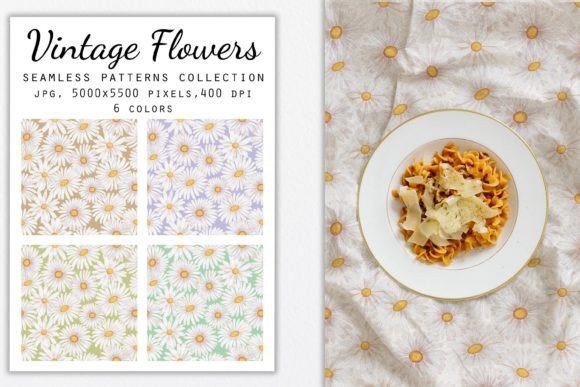
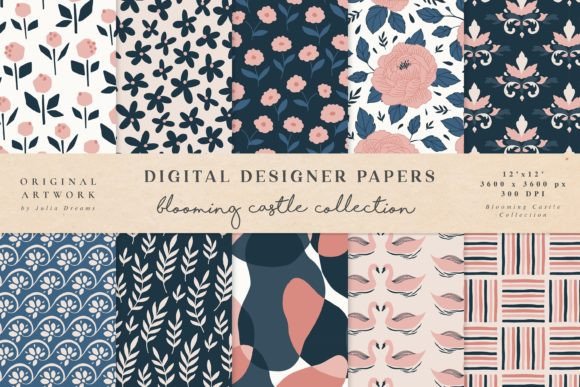
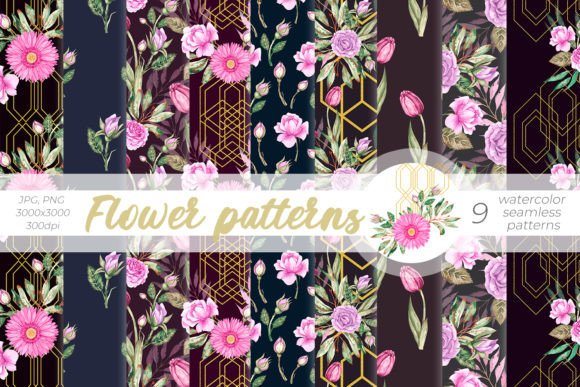
Flower Patterns, Watercolor Patterns refers to a curated digital collection of nine seamless, hand-painted floral motifs rendered in soft, translucent watercolor textures. Each pattern repeats smoothly without visible seams, making them suitable for continuous surface design across physical and digital applications. The set includes both JPEG and PNG file formats—each at 3000×3000 pixels and 300 DPI—ensuring high-resolution output for print and screen use.
This type of pattern collection is designed for creators who need versatile, ready-to-use assets without the time or technical skill required to develop original watercolor florals from scratch. It bridges the gap between custom illustration and stock graphics, offering an aesthetic that feels organic and artisanal while maintaining practical usability.
Why Consider Flower Patterns, Watercolor Patterns?
Designers, small-business owners, educators, and hobbyists often seek visual elements that convey warmth, natural elegance, and approachability. Floral motifs communicate growth, renewal, and celebration; watercolor rendering adds subtlety, variation in tone, and a tactile, handmade quality. Together, they support branding or projects where polished but not overly formal visuals are appropriate.
Common use cases include printed fabric for children’s clothing (e.g., dresses, bibs, or rompers), gift wrap and holiday packaging, stationery such as notebooks and invitation cards, digital scrapbooking kits, and textile design for home décor or fashion accessories. The seamless nature of each pattern means it scales predictably—whether tiled across a full yard of cotton fabric or repeated subtly on a notebook cover.
Practical Benefits and Realistic Expectations
The primary benefit lies in efficiency and consistency. With nine distinct patterns—each unique in composition, density, and color balance—you gain variety without sacrificing cohesion. Because all files are delivered at identical dimensions and resolution, integrating them into existing workflows (e.g., Adobe Photoshop, Illustrator, Canva, or Procreate) requires minimal adjustment. The inclusion of both JPEG and PNG formats accommodates different needs: JPEG for broad compatibility and smaller file size; PNG for transparency support when layering over photos or colored backgrounds.
However, users should recognize inherent tradeoffs. As a pre-made collection, Flower Patterns, Watercolor Patterns does not offer customization of individual elements—such as changing stem direction, adjusting petal count, or recoloring specific blooms without manual editing. Users comfortable with raster editing tools can modify colors or contrast, but vector-based alterations (e.g., isolating and repositioning single flowers) are not possible without significant reconstruction.
Also, while the watercolor aesthetic provides charm, it may not suit contexts requiring bold graphic clarity, strict brand color matching, or photorealistic detail. The soft edges and subtle granulation typical of watercolor media mean these patterns perform best at medium to large scales—fine details may blur or fade when reduced significantly (e.g., below 150×150 px per repeat unit).
When This Collection Is a Strong Fit
Flower Patterns, Watercolor Patterns is well-aligned with projects where speed, aesthetic harmony, and moderate scale are priorities. For example:
- A small-batch apparel brand launching a spring capsule collection for toddlers may use one pattern for bodysuits and another for matching tote bags—relying on shared visual language to unify product lines.
- An independent stationer preparing wedding invitations could apply a delicate floral pattern as a background texture behind typography, using the PNG version to preserve clean edges around text blocks.
- A teacher designing classroom resources might incorporate a light floral tile as a subtle border on printable worksheets or digital slide decks—enhancing visual appeal without distracting from content.
In each case, the user benefits from consistent quality, immediate availability, and stylistic continuity across multiple deliverables—all without commissioning custom artwork or licensing complex stock libraries.
When Alternatives May Be Worth Exploring
Consider alternatives if your project demands precise control over every visual element. For instance, if you’re developing a signature textile line for luxury fashion and require exclusive rights to motifs, a custom illustration engagement would better protect intellectual property and ensure uniqueness. Similarly, designers building scalable brand systems—where patterns must align precisely with logo geometry, typography rhythm, or strict color palettes—may find value in working with a designer to generate bespoke, vector-based repeats.
For strictly digital use—such as UI backgrounds or web banners—lighter-weight SVG or CSS-generated patterns may offer better performance and responsiveness than high-res raster files. And if budget constraints are primary, free or low-cost pattern libraries (with clear attribution requirements) exist, though they often lack the cohesive theme and resolution consistency found in Flower Patterns, Watercolor Patterns.
Making a Practical Decision
To determine whether this collection meets your needs, ask three questions:
- What is the intended output medium? If your work involves print—especially fabric, packaging, or stationery—high-resolution raster files like those included are appropriate and widely supported.
- How much design flexibility do you need? If you anticipate frequent recoloring, cropping, or combining with other illustrated elements, confirm your comfort level with raster editing tools before purchase.
- Does the aesthetic match your audience and context? Watercolor florals read as gentle, nostalgic, or artisanal—not clinical, futuristic, or minimalist. Test samples against your brand guidelines or project mood board to assess alignment.
Finally, review licensing terms carefully. While the collection includes production-ready files, usage rights vary by vendor. Confirm whether personal, commercial, or extended licenses apply—and whether attribution is required for certain uses.
Flower Patterns, Watercolor Patterns serves a specific niche: creators seeking accessible, cohesive, and print-suitable floral designs grounded in a recognizable artistic technique. It is neither a replacement for custom illustration nor a universal solution for all pattern needs—but for many practical applications, it offers a balanced combination of quality, versatility, and ease of integration.