Deer and Owl Seamless Patterns: Thoughtful Watercolor Design for Real Creative Work
Deer and Owl Seamless Patterns isn’t just another digital paper pack—it’s a quietly intentional response to how creators actually work today. In an era where attention is fragmented, tools multiply, and authenticity carries real weight, hand-painted watercolor patterns offer something increasingly rare: warmth, texture, and visual coherence without the fatigue of overdesigned graphics. This collection of 18 high-resolution digital papers bridges craft tradition with modern surface design needs—whether you’re developing fabric for a small-batch clothing line, designing wedding stationery with quiet elegance, or building a cohesive brand identity that feels human-made, not algorithm-generated.
Why Hand-Painted Watercolor Still Matters in a Digital-First World
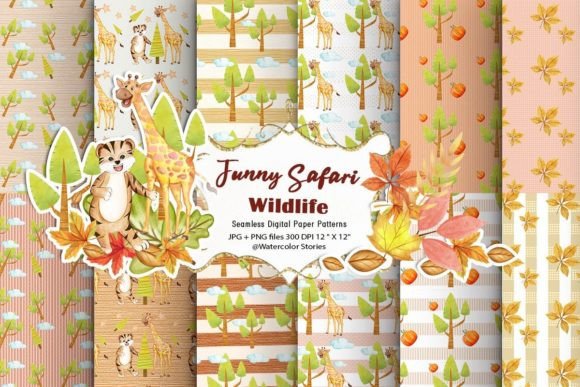
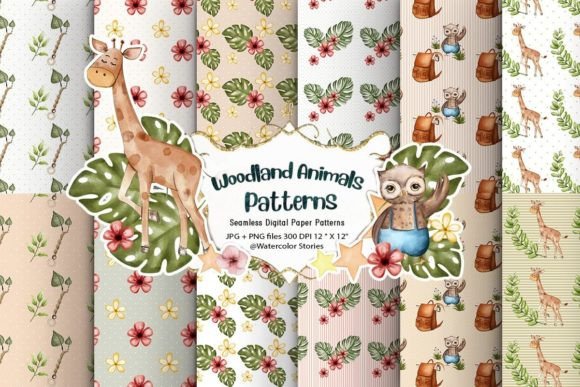
Watercolor has seen a steady resurgence—not as nostalgia, but as functional contrast. Where vector graphics dominate UI kits and social templates, watercolor brings organic variation: subtle pigment blooms, soft edges, and gentle transparency shifts that mimic natural light and material behavior. That’s why Deer and Owl Seamless Patterns stands out. Each of the 12 seamless patterns on solid backgrounds (12×12 inches, 300 DPI) was painted by hand first, then digitally refined—not traced, not generated, not stylized into abstraction. The result? Patterns that hold up at print scale *and* retain character when scaled down for stickers or social thumbnails.
This matters especially for professionals who juggle multiple output formats. A graphic designer creating a boutique hotel’s branding suite might use one pattern for letterhead, another as a subtle background in a presentation deck, and a third as a textile motif for custom pillow covers—all from the same source files. Because the watercolor textures are built-in—not layered on top as filters—they behave predictably across applications, reducing trial-and-error time in Adobe Illustrator, Procreate, or even Canva.
Two Formats, One Practical Workflow
The collection splits intelligently between utility and flexibility: 12 seamless patterns on solid-color backgrounds and 6 unique pattern tiles on transparent backgrounds—also 12×12 inches and 300 DPI. That distinction reflects how surface designers and product creators actually use assets.
- Solid-background patterns are ready-to-use for immediate application: scrapbooking pages, printable wall art, or fabric mockups where consistent tone and contrast are essential. No extra masking or blending needed—just drag, drop, and adjust scale.
- Transparent-pattern tiles serve as modular building blocks. Use them to overlay on photos, blend with gradients, or composite onto packaging mockups with realistic layering. They’re ideal for branding projects where consistency across touchpoints (website, business cards, product labels) requires precise control over opacity, color interaction, and edge treatment.
Neither format includes watermarks—a practical detail that saves hours of post-download cleanup. And because all images arrive fully colored and print-ready, there’s no need to second-guess saturation levels or spend time adjusting hues to match a brand palette. You can start designing within minutes—not after half a day of prep.
Fitting Into Evolving Creative Habits
Creative workflows have shifted toward hybrid practices: part digital, part tactile, part collaborative. Educators print Deer and Owl Seamless Patterns for classroom art projects; indie authors license them for interior illustrations in children’s books; small-batch stationers combine them with foil-stamping mockups to preview wedding suites before committing to press runs. Even marketers use them thoughtfully—not as filler graphics, but as tonal anchors in email campaigns or landing pages where “handmade” signals care and intentionality.
This reflects a broader preference: people increasingly associate analog texture with trustworthiness. A 2023 Adobe Creative Trends Report noted that 68% of consumers say they’re more likely to engage with brands using “authentic, imperfect visuals”—not polished perfection. Deer and Owl Seamless Patterns meets that expectation without leaning into trend-chasing gimmicks. The deer motifs aren’t cartoonish; the owls aren’t overly whimsical. They’re gentle, balanced, and grounded—ideal for audiences who value subtlety over spectacle.
Real Projects, Real Constraints
Consider a freelance illustrator launching a line of nature-themed greeting cards. She could generate patterns with AI tools—but those often lack repeat integrity or struggle with edge alignment. With Deer and Owl Seamless Patterns, she gets guaranteed seamless tiling, true 300 DPI resolution, and watercolor grain that translates faithfully to offset printing. No pixelation. No awkward joins. Just reliable, beautiful starting points.
Or imagine a small business owner developing eco-friendly kids’ apparel. She needs fabric designs that read clearly at 6-inch repeats but also scale down for care labels or hang tags. The 12×12 inch tile size gives her room to crop, rotate, or mirror elements without losing fidelity—something smaller or lower-res assets can’t support without visible degradation.
Even educators benefit: printable worksheets with these patterns feel less clinical than standard clipart-heavy layouts. A teacher preparing a forest ecology unit might use a deer motif as a subtle header background, reinforcing theme without distraction—supporting visual literacy while keeping focus on content.
Color Integrity and Print Realism
All files are delivered in RGB, optimized for screen use and digital sharing—but they’re built with CMYK translation in mind. While colors on your monitor may vary slightly from final printed output (a universal limitation of digital-to-print workflows), the watercolor base ensures rich tonal depth and natural gradation. Unlike flat vector fills or heavily saturated PNGs, these patterns retain midtone nuance, so shadows don’t crush and highlights don’t blow out during press calibration.
That realism extends to texture behavior. When printed on uncoated paper or linen-textured cardstock, the watercolor grain interacts authentically with the substrate—adding tactility that flat digital graphics simply can’t replicate. It’s a small detail, but one that elevates perceived quality across physical products: invitations, notebooks, gift wrap, or even branded tote bags.
A Resource Designed for Long-Term Use
Unlike trend-dependent assets that feel dated within months, Deer and Owl Seamless Patterns leans into timeless motifs: woodland animals rendered with restraint, watercolor washes that suggest movement without chaos, and compositions that balance negative space with detail. That longevity makes them valuable across seasons and client needs—no need to replace them annually or relicense for new projects.
They also integrate cleanly into existing toolchains. Whether you’re using Affinity Designer for layout, Procreate for hand-lettered overlays, or Figma for digital prototypes, the high-res TIFF and PNG files maintain integrity. No plugin dependencies. No proprietary formats. Just clean, open-standard assets that respect your time and technical preferences.
Final Thoughts for Practitioners
If you’re evaluating whether Deer and Owl Seamless Patterns fits your work, ask yourself two questions: Do I need design elements that feel cohesive *and* distinctive? Do I regularly move between digital and physical outputs—and want assets that perform reliably in both?
If yes, this collection delivers practical value—not just aesthetic appeal. It supports thoughtful making, not just faster making. It respects the labor behind good design while removing avoidable friction: watermark removal, resolution guesswork, or pattern misalignment. And it does so without demanding stylistic compromise. The deer and owl motifs are present but never prescriptive—flexible enough to anchor a minimalist brand or add gentle charm to a playful kids’ craft kit.
Ultimately, Deer and Owl Seamless Patterns reflects a growing priority among creators: choosing tools that align with how we want to work—not just how fast we can ship. That’s not a trend. It’s a practice. And it starts with resources that honor both craft and clarity.